An agency owner tells you a site will take six weeks. A freelancer on an online marketplace promises ten days. You sign the contract, set a target launch date for late next month, and start planning an email campaign to showcase the new branding. Three months later, you are still staring at a half-finished staging server while your team argues over hero text.
If you are asking how long does a website redesign take, the short answer for a professional B2B or healthcare site is twelve to sixteen weeks. Anyone promising a custom commercial build in under a month is either cutting severe technical corners or selling you a pre-made template that dozens of other firms already use—real projects take time.
How long does a website redesign take stage by stage
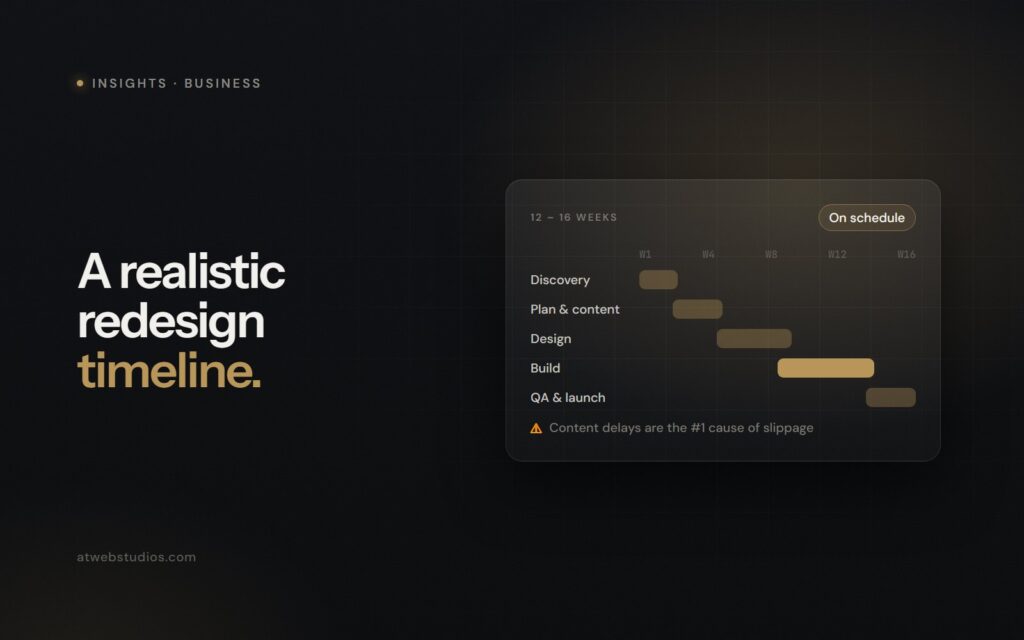
When a project runs over schedule, people usually blame the code or the design software. In reality, a standard twelve-to-sixteen-week timeline splits across five distinct phases, each requiring focused effort from both sides of the table.
- Discovery and strategy (Weeks 1 to 2). Setting clear business goals, mapping user navigation paths, and defining site architecture before drawing a single layout frame.
- Content creation and asset gathering (Weeks 3 to 7). Drafting copy, organizing team photography, auditing existing resources, and finalizing messaging.
- Custom web design (Weeks 5 to 8). Creating bespoke visual layouts in Figma, establishing responsive design systems, and refining interface interactions.
- Hand-coded custom development (Weeks 8 to 13). Building pages with clean HTML, CSS, and lightweight JavaScript instead of drag-and-drop page builders.
- Quality assurance and launch (Weeks 13 to 15). Testing across browsers and devices, verifying form routing, checking accessibility standards, and managing DNS propagation.
Notice how these stages overlap. Visual design begins while copy is being finalized, and custom web development starts while initial page templates receive sign-offs. This parallel approach keeps momentum high, but it requires active participation every single week.
Content is where timelines go to die
If there is one absolute truth in web production, it is that content delays more launches than code ever will. Most business leaders assume writing copy for a twelve-page website takes a long weekend.
Then week four arrives. You discover your services section requires three new case studies, your founder biography needs a full rewrite, and nobody has updated your practice group descriptions since 2018. The project stalls because your internal team is trying to write technical copy between client calls and quarterly planning meetings.
Designers cannot finalize layout heights without real copy. Styles break when actual headlines turn out to be three times longer than placeholder text. When a client delivers copy piecemeal over three months, a sixteen-week timeline quickly stretches to eight months.
Review cycles double your timeline if you let them
Feedback bottlenecks are the second major cause of schedule inflation. An agency sends a home page layout on Tuesday, and you forward the link to seven executives across sales, operations, and compliance.
A week passes before the first set of notes arrives. Two department heads offer contradictory opinions on the navigation menu. Another week disappears while your leadership team debates whether to describe your core offer as a service or a solution. By the time you return consolidated feedback to the studio, fourteen days have vanished on a task scheduled for 48 hours.
A redesign timeline is not measured in working hours. It is measured in the days between a deliverable landing in your inbox and your team approving it.
To protect your target date, limit decision-makers to two people. Assign a single project lead who holds internal authority to resolve disagreements and return unified, actionable feedback.
Hand-coding takes longer upfront but saves years later
Agencies that promise four-week turnarounds rarely build anything custom. They buy a pre-packaged WordPress theme, install a heavy visual page builder plugin, and stack twenty third-party extensions to handle basic form submissions. That approach gets a prototype live quickly, but it leaves you with a fragile, slow website.
The consequences land six months later. Page speeds drop, script conflicts break layouts after routine updates, and security vulnerabilities emerge. Fixing those issues costs far more than doing the work correctly from day one.
We hand-code every build using lean, clean code. Writing HTML, CSS, and modern JavaScript by hand takes two or three additional weeks during production, but the speed gains are permanent.
Your site loads instantly on mobile connections. Search crawlers index your pages easily because there are no layers of builder bloat masking your markup. Pairing clean code with specialized SEO and performance services ensures your site earns high search rankings rather than struggling under slow load times.
Why a boutique studio cannot start your project next Monday
When you contact a specialized studio, you might find their first open production slot is six or eight weeks out. This is not artificial scarcity—it is a guarantee of build quality.
We restrict our production schedule to four projects per quarter. That cap ensures senior developers and designers work directly on your build rather than handing your site off to junior staff or offshore contractors.
If an agency says they can start tomorrow morning, ask why their calendar is empty. Boutique studios book client slots months in advance so each site receives complete focus during its build window. If you want to see how this high-touch process translates into completed builds, you can view our client work and case studies for an inside look at recent projects.
How to keep your web project on schedule
You do not need technical expertise to keep a build on schedule. You simply need preparation before the project kick-off date.
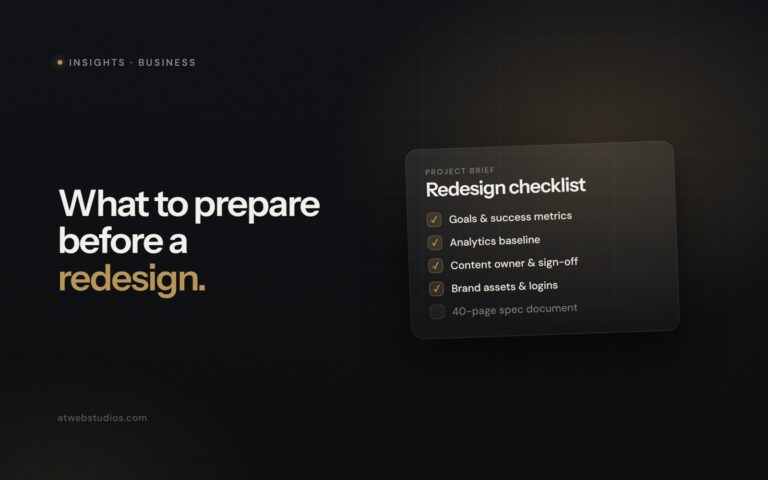
Audit your existing assets before signing a contract. Collect high-resolution brand assets, photography, testimonials, and copy documents into a single shared repository.
Appoint one internal lead with final sign-off authority, agree on a strict 48-hour review turnaround for deliverables, and trust the design team you selected to lead the work.
Related reading
Frequently asked questions
What is a realistic timeline for a custom website redesign?
A professional custom redesign for a B2B or healthcare site typically takes twelve to sixteen weeks from start to finish. Promises of a fully custom commercial build in under a month usually mean an agency is using pre-made templates or cutting technical corners.
Why do website redesign projects usually get delayed?
Content creation is the primary cause of project delays because writing copy and gathering assets takes longer than teams anticipate. Disorganized review cycles and conflicting feedback from too many internal stakeholders also slow down momentum.
How much extra time does hand-coding a website take?
Writing custom HTML, CSS, and JavaScript adds two to three additional weeks to the production schedule compared to using template page builders. This extra upfront effort ensures permanent performance gains, fast mobile loading, and better search engine indexing.
How can a company prevent delays during a website redesign?
To protect the launch date, limit internal decision-makers to two people and appoint a single project lead with authority to consolidate feedback. Preparing finalized text and assets early also prevents approval bottlenecks that stretch timelines.