Last month, a partner at an accounting firm handed us a 60-page PDF outlining every drop-down menu, button hover color, and layout animation for their proposed site. It took three weeks and several thousand dollars of their internal team’s time to draft. Within twenty minutes of reviewing their traffic data, we discarded half of it.
Knowing what to prepare for a website redesign saves money and prevents expensive rework. Preparation is not about designing the site yourself in Microsoft Word. It comes down to bringing core business realities to the table before a design team touches a single line of code.
Identify your three highest-value services
Most corporate websites try to say everything to everyone on the homepage. They list fourteen service lines with equal visual weight, drowning the two offerings that generate eighty percent of their profits.
Decide which three services or product lines drive your actual margin. When an engineering team understands where your firm makes its money, they structure user paths that guide qualified visitors straight to those high-margin conversion points.
Secure access to your existing analytics and search data
We often ask for Google Analytics access during an initial consultation, only to wait two weeks while a client tracks down login credentials from a former marketing director. That delay stalls discovery and forces educated guesses where hard numbers should exist.
Dig up your analytics access today. Knowing which pages currently draw traffic, where bounce rates spike, and how organic search users land on your site gives your development team immediate baseline data. You can examine how clean markup fixes existing tracking flaws on our SEO and performance page.
List your existing site liabilities and pain points
Every redesign stems from frustration with a current site. Perhaps your page builder takes eight seconds to load on mobile devices, or your team spends four hours a week updating broken plugins.
Write down these specific pain points before your initial call. Knowing whether you suffer from slow load speeds, bad mobile rendering, or security vulnerabilities helps developers select the right build tools. It also prevents you from paying to rebuild features that never worked in the first place.
Establish who holds final sign-off authority
Design by committee is the fastest way to balloon a web budget and ruin a project timeline. A draft hero section that gets approved on Tuesday will be torn apart on Thursday if a senior partner who missed the kickoff meeting suddenly steps in.
Name one decision-maker who has the final authority to sign off on wireframes, design direction, and copy. If multiple stakeholders must give input, gather their feedback internally before submitting a single, consolidated set of revisions to your studio.
Draft a clear content position, not a finished script
You do not need polished copy written before hiring a design firm. Writing final text into static documents often creates rigid blocks that fit awkwardly into custom layouts.
What you need is a position. Decide on your core value proposition, gather your main case study results, and collect existing media assets like staff headshots or project photos. Having a clear stance on what makes your firm different gives designers the narrative framework they need when building tailored layouts on our web design service page.
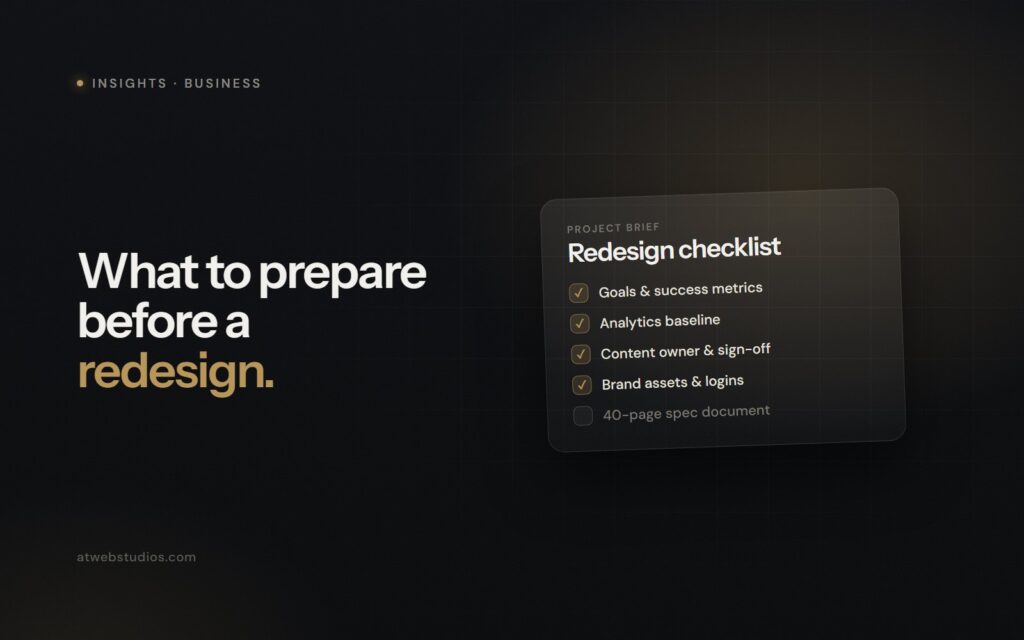
Stop writing forty-page requirements specifications
Detailed technical spec sheets written prior to consulting developers almost always waste money. Non-technical clients regularly specify heavy software integrations, complex client portals, or bloated database features that cost tens of thousands of dollars, when a lighter custom build would achieve the exact same goal for half the price.
A great project brief defines business problems and revenue goals. It leaves the technical architecture to the specialists building the system.
When you bring problems rather than pre-baked solutions, your studio can recommend efficient custom architectures that keep ongoing maintenance light.
Before writing a feature wish list, prepare these strategic inputs instead:
- Target buyers. The specific job titles, pain points, and buying triggers of your ideal clients.
- Current metrics. Your monthly traffic numbers, current conversion rates, and existing lead volume.
- Primary competitors. Two or three firms competing directly for the same search rankings or client accounts.
- Hard deadlines. Real business drivers like trade shows, product launches, or fiscal year transitions.
Once you have these inputs organized, you can evaluate how a dedicated engineering studio approaches scoped projects. To see how we limit our work to four custom builds per quarter, read our overview of how our studio operates.
What to prepare for a website redesign right now
Open a single text document today and write down your top three revenue-generating services, your designated decision-maker, and your analytics login credentials. Store your visual assets in a shared drive.
Skip the sixty-page specification manual. Bring your core numbers and your functional goals, then let your web studio build the architecture. You will save weeks of internal meetings and keep your budget focused on what actually drives client inquiries.
Related reading
Frequently asked questions
Do I need to write all the website copy before hiring a designer?
You do not need finished copy written before hiring a design firm. Writing text in advance often creates rigid blocks that fit awkwardly into custom layouts. Instead, prepare a clear content position with your core value proposition, main case study results, and existing media assets.
Should a company write a technical requirements document for a website redesign?
Writing detailed technical specs before consulting developers often wastes money on unnecessary features. A project brief should state your business problems, target outcomes, budget parameters, and hard deadlines. This approach allows specialists to recommend an efficient technical architecture that meets your actual goals.
How should a business manage approvals during a website redesign?
Name one decision-maker who has final authority to sign off on wireframes, design direction, and copy. Design by committee often balloons project budgets and ruins timelines when late feedback disrupts approved work. If multiple stakeholders must provide input, gather their feedback internally before submitting one consolidated set of revisions.
What data should a business collect before starting a website redesign?
Secure access to your existing Google Analytics data so developers can review current traffic, bounce rates, and search performance. You should also identify your three highest-margin services and list your current site liabilities, such as slow load speeds or mobile rendering issues. Having this baseline information prevents educated guesses during the discovery phase.